Trust, Not Charity: Youth-Led Changemaking in Chitungwiza
Chitungwiza, Zimbabwe · Cumulative: 6 challenges, 2023-2026 · February 2026
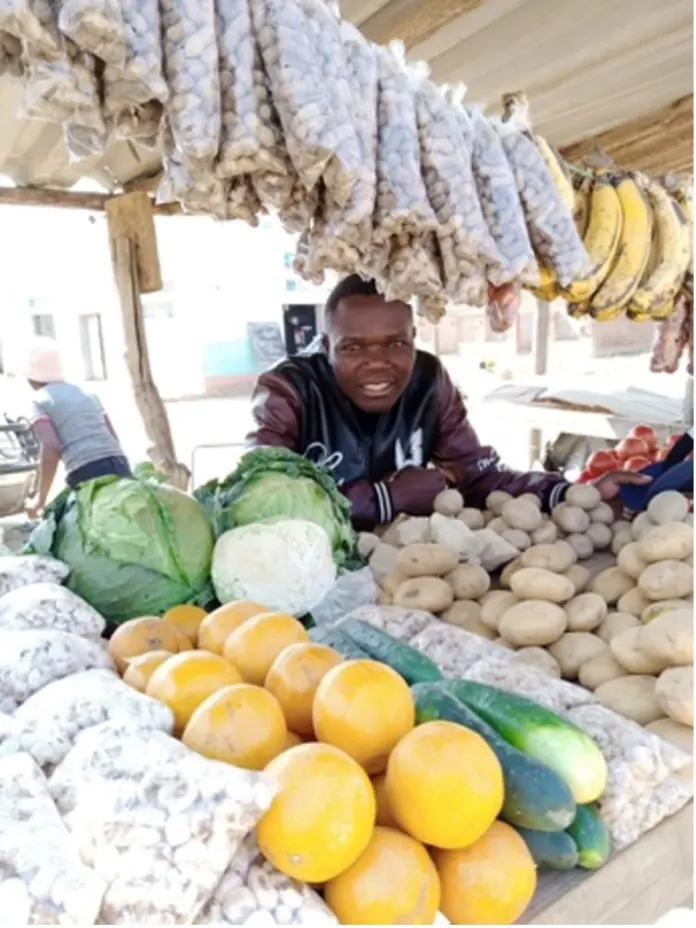
In Chitungwiza, young people are not treated as a problem to be managed. They are trusted with a small amount of money and asked a simple question: what will you build?
Context
Chitungwiza is Zimbabwe’s third-largest city, home to roughly 429,000 people about 25 km southeast of Harare. Youth unemployment sits near 74%. The economy is largely informal and survivalist, formal financing is scarce, and the city carries a long-running water and sanitation strain. It is a hard place to start anything.
It is also where The Work Under The Tree Trust (TWUTT) runs the Youth-Led Changemaking Challenge, the local delivery of the YES Challenge.
The Act of Trust
Young people here do not receive donations. They receive a Trust-Based Investment (TBI): a small sum, given with belief rather than conditions.
Teams of three move through three levels:
- Level 1: $25 for three weeks. Goal: generate a profit.
- Level 2: $50 for four weeks. Repay the investment plus a 10% profit share.
- Level 3: $100 for six weeks. Repay again, plus 10%.
If a team makes no profit, the debt is waived. The trust was the point, not the collateral. Successful teams return 10% of profits into a revolving fund that seeds the next cohort, and about 95% of teams repay. This is not charity that depends on the next grant. It is a small local economy that refills itself.
The Proof
Across six challenges since 2023:
- 155 teams and 345 young people have taken part.
- 77% of teams generated a profit.
- 95% of trust-based investment was repaid.
- ~31,000 customers were served by youth-run businesses.
- ~$18,000 in profit was generated by participants. That is profit earned, not capital deployed.
The revolving fund itself is small by design. In a representative challenge, $2,400 is issued, about $2,200 is repaid, and roughly $200 returns as the profit share. The program has grown from a single 10-team pilot in 2023 into several cohorts a year.
The most recent round, Challenge 4 Level 3 (January to February 2026), put 12 teams and 36 participants through a six-week cycle. Three weeks in, six teams were already profitable, one was at break-even, and five were still trading through losses, working against back-to-school spending cycles, heavy rains, and currency liquidity swings.
A Story
Memory’s team started with $20 and a second-hand clothing bale. They sold what they could, then took in sewing orders on the side. Within three weeks the team had turned that $20 into more than $100 in profit. Not a windfall, but a real margin, earned in a real market, by people the system had written off.
Memory’s team is one of 155. That is what makes the case: given a little trust and a little capital, most young people here do not just get by. They build.
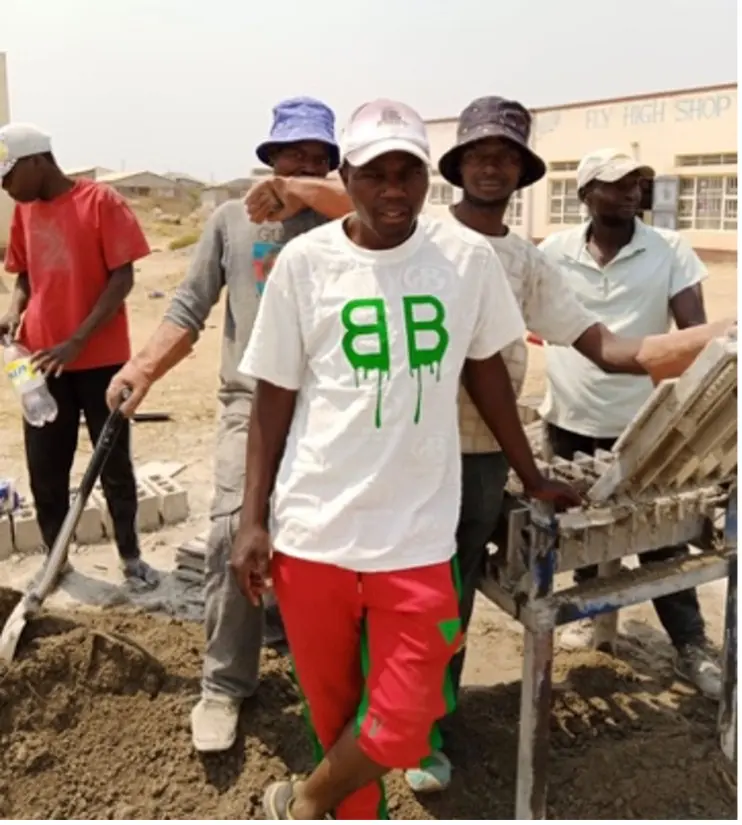
Another team moved from selling bread to producing concrete bricks for local construction. Photo: The Work Under The Tree Trust.
What It Means for Institutions & Funders
Chitungwiza is the clearest evidence for the institutional model. A Changemaker Hub does not need a large budget or a Western intermediary to produce results. It needs a local host, a revolving fund, and the decision to trust young people before they have proven anything.
The honest picture matters too. Operating costs of roughly $5,000 per round (facilitation, workshops, transport, administration) have been carried by European donors, and that funding is expected to wind down in the second half of 2026. TWUTT is building toward local self-funding: alumni like Dennis Tsikwa ($710 turnover, $133 profit in his own challenge) now offer land and mentorship, and a one-hectare maize project in Rusape is being piloted as a possible local income stream. Those farming figures are projections, not guarantees. They depend on weather, pests, and market prices, and we report them as such.
What is already proven is the core: trust, plus a few dollars, reliably turns “at-risk youth” into working entrepreneurs. That is what an institution sets in motion when it becomes a Changemaker Hub.
Could your institution do this?
See where you stand on the five conditions that let young people act. It takes about three minutes.
Take the readiness diagnostic